WELCOME TO YOUR FLORENCE JOURNEY
I’m so glad you’re here!
This Journey Guide is your companion as you prepare for our time together in Florence. Inside, you’ll find everything you need to get ready - practical details, thoughtful guidance, and a few gentle suggestions to help you arrive feeling relaxed and well-prepared. It’s a “living” document, meaning that it will be updated as time goes on, so please check in often for updates.
To begin, scroll down to the “Before We Go” section of the page. Here you’ll find important steps you need to take prior to departure. Please make sure these are completed as early as possible, so that your travel plans can move forward without issue.
On our first night in Florence, we’ll jump right into one of my absolute favorite Italian traditions - aperitivo. It’s a time for us to share together and toast to our adventures in Florence with a glass of wine and small bites. Check in time at the hotel is 3 pm. Please plan to arrive at the hotel no later than 5 PM on the 7th to check in and get settled in your room. We’ll be gathering together for aperitivo at 6:00 PM, and from there we’ll be heading out for a delicious, authentic Italian dinner.
I’m looking forward to traveling together. As always, I’m available at angi@roamandgather.com to answer any questions you might have along the way.
Warmly,
Angi
Your Fellow Travelers…

Trip Details
-
November 7
If you’re coming from the US, please keep in mind that you will need to leave by at least the 6th to arrive in Italy on time. We request that everyone check into the hotel by 5:00 PM on the 7th.
-
THE FRAME HOTEL
via Panzani, 2
Firenze, IT 50123
www.theframehotel.com
Tel: [+39 055 267 0549]>>>
Check in: 3:00 PM
Check out: 12:00 PM>>>
- The hotel is an easy 6-minute walk from the Florence’s Santa Maria Novella train station.
- If you arrive before 3 pm, the hotel will be happy to hold your bags until you can check in.
- Please arrive at the hotel by 5:00 pm on our first day to check in and get settled into your room. We will have aperitivo together starting at 6:00 pm!
-
DAY 1
Our time together in Florence begins with the Italian tradition of aperitivo! In the early evening we’ll gather together for a glass of wine and snacks. From there, we’ll head to a local restaurant for a delicious meal.
Meals Included: aperitivo, dinner
DAY 2
Today, we’ll make a visit to a sculptor’s studio, where you’ll witness first-hand how Florence’s artistic past has impacted modern-day artists working in the city.
After free time to wander and grab lunch, we’ll gather together again for a fascinating walking tour of the city, focusing on its Medieval and Renaissance history. We’ll see one of the most important works of the Renaissance - Michelangelo’s statue of David.
Then we’ll head to a local restaurant to eat one of Italy’s most loved dishes - pizza.
Meals included: breakfast and dinner
DAY 3
The influence of Florence’s artistic history is never very far away, and today we’ll head over to the less touristed area of the city (known as the Oltrarno - literally “other side of the Arno” which is the river that bisects Florence) to visit a local artisan’s studio and see how they are keeping traditions alive.
After our studio visit, you’ll have free time to grab lunch and visit more artisans’ studios on your own, or stop by one of the museums or gardens on this side of the river.
After that, those who are interested can join Angi at a hidden underground cantina with great wine, for aperitivo. We’ll close the evening with dinner at a cozy local trattoria in the Oltrarno.
Meals included: breakfast and dinner
DAY 4
Today you’ll experience the magic of the Tuscan countryside with a private tour. We’ll head out to Chianti, where the famous wine of the same name is produced. We’ll have the opportunity to taste some of the food and wine produced in the region.
From there, we’ll stop at the charming, tiny hill town of Radda in Chianti, where you can grab a quick lunch and explore on your own. Afterwards, we’ll stop at another small vineyard for more tasting and a delicious farm to table dinner, featuring products and wine produced on the land.
Meals included: breakfast and dinner
DAY 5
You’ll have the entire day free to explore Florence, or to take a day trip and explore further afield.
Meals included: breakfast
DAY 6
It’s our last day together! We’ll meet up again with Camilla, our tour guide from earlier in the week, for a tour of Florence’s stunning Santa Croce Basilica and a glimpse into hidden parts of the city. After that you’ll have more free time.
Our final meal together will be a cooking class at the home of a Florentine local named Francesca. We’ll have a great time cooking together, while learning simple techniques to create delicious pastas and sauces. We’ll close the evening by enjoying our creations together in Francesca’s warm and cozy kitchen.
Meals included: breakfast and dinner
DAY 7
It’s departure day. Check out from the hotel and head to your next destination - whether its back home, or to see more of Italy - with a full heart, new friends, and an inspired soul.
Meals included: breakfast
-
50% of the remaining balance ($2150) is due May 15. The final balance remaining ($2150) is due September 15. Invoices will be sent to you around the 1st of each month.
Before We Go…

Sign the Terms & Conditions and the liability Waiver

Check your passport
If you already have one, double check that your passport is valid for our travel dates. If it needs to be renewed, or if you don’t have a passport yet, you’ll need to start the renewal/application process to ensure you can travel. Do this ASAP, as processing times can sometimes take longer than anticipated.

Get Travel Insurance
Purchase the mandatory Travel Insurance with minimum of $200,000 in medical coverage. Cancel for any reason comprehensive coverage is recommended in order to recoup your losses in the event that you’re unexpectedly unable to join the trip.
The link above will send you to Squaremouth, a website which allows you to compare various policies and choose the one best for you. For information on travel insurance and what to look for in your policy, see my post on the Roam & Gather journal.

SEND YOUR PHOTO TO ADD TO THE HUB
If you haven’t already, upload your photo so it can be added to this page. This will help us all get to know one another a bit better, and start associating faces with names.

ANSWER THE QUESTIONNAIRE
Please follow this link to answer a brief series of questions that will help us make sure you have the best journey possible.

Send proof of insurance
Please email a copy of your policy to angi@roamandgather.com
Practical Notes



-
TRAINS FROM MAJOR CITY AIRPORTS TO FLORENCE CITY CENTER
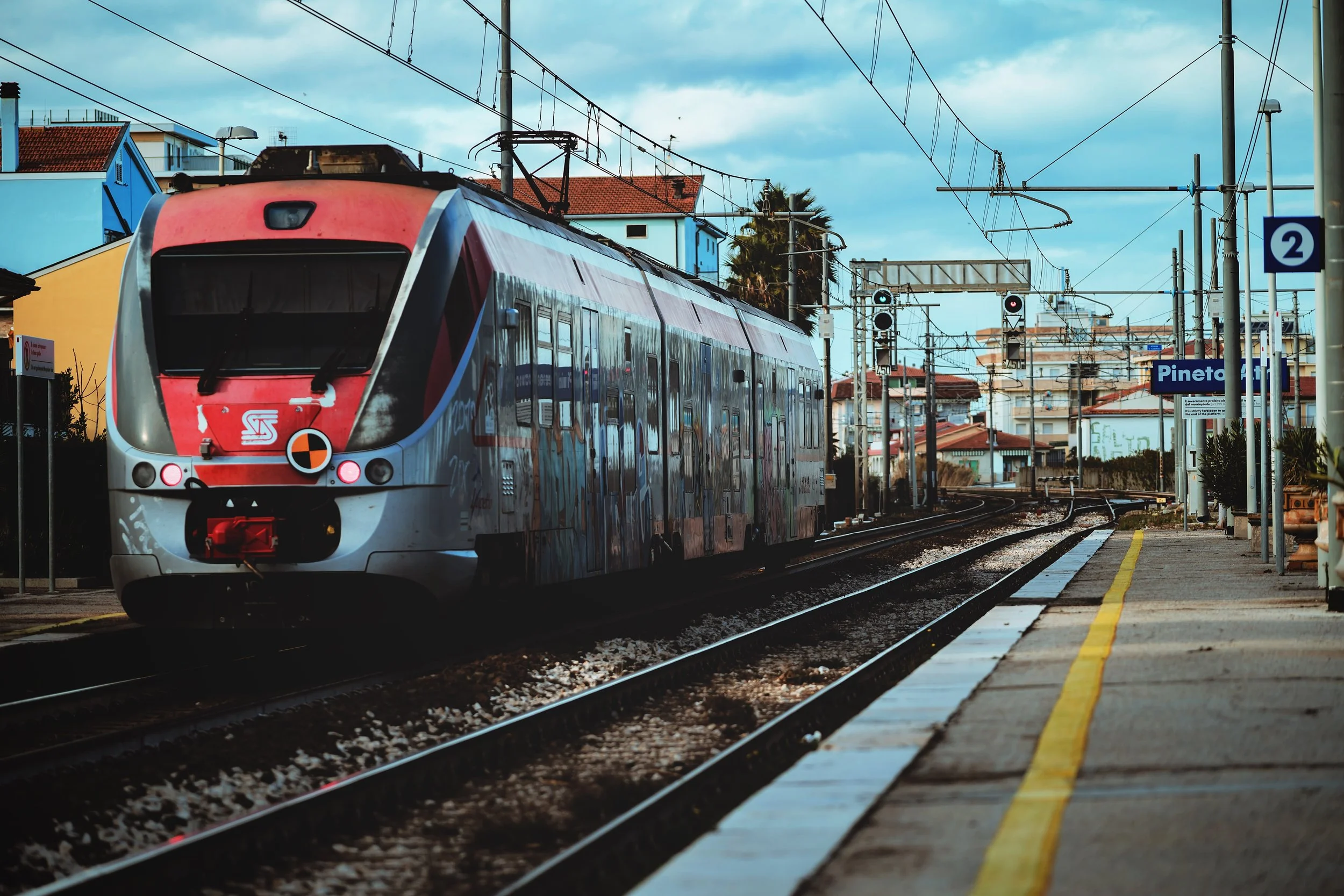
Upon arrival at the airport, you’ll need to take a train from the airport to the central train station. In Rome, the airport shuttle train is called the Leonardo Express, in Milan it’s known as Malpensa Express, and in Bologna it’s called the Marconi Express.
Tickets for the airport shuttles can be purchased when you arrive at the airport, and trains are frequent, usually every 15-30 minutes depending on time of day.
Be aware that, depending on what type of ticket you have, you may need to validate it before boarding (see important note below), so check with a station attendant BEFORE you board.
After arriving at each city’s central train station, you’ll then be able to begin your onward journey to Florence (see the Inter-City Train information below).
If you’re flying directly into Florence, a cab is the easiest way to get to city center. There are signs in the airport guiding you to the taxi queue.
INTER-CITY TRAINS
Italy has a well connected high-speed rail system. Travel times from Rome & Milan to Florence is roughly 1.5-2 hours. The train from Bologna is just under 40 minutes.
There are three national high-speed trains run by TrenItalia. All begin with the word “Freccia” (which means arrow). There is the frecciarossa, frecciabianco, and frecciargento. Any one of these trains will work for traveling between cities. There’s also a private company called Italo that runs high-speed train service.
Tickets can be bought in advance through the TrenItalia website or apps like Omio. Below are the point to point train stations you want to select when buying tickets. The larger cities have more than one station, so be sure you have the correct stations selected when you purchase your tickets.
Rome Termini >> Florence Santa Maria Novella
Milano Centrale >> Florence Santa Maria Novella
Bologna Centrale >>Florence Santa Maria Novella
There are pros and cons to making your high-speed rail reservations in advance. The pros are that you’ll often get a cheaper price. However, the cons are that your tickets are purchased for a specific date and time. So, if you miss your train for some reason, the tickets are often non-refundable. You’ll then need to repurchase them, and you may not be able to get tickets for that day. I recommend purchasing your tickets in advance, but not too far ahead.
When you arrive at the train station, check the arrival/departure board to see what track (called a “binario” in Italian) your train is leaving from and head there to board.
Allow PLENTY of time at the train station. The stations can be huge, tracks can be long, and depending on which binario your train is leaving from, you will have a surprisingly long walk! Plan on arriving at the station at least 30 minutes before departure. You may have to wait a bit for your train to appear on the departure board, but it’s better than missing it altogether, or having to run. Train doors close 1 minute before listed departure times.
Once you find your track and train, look for the carriage number matching the one on your ticket. This will usually be displayed digitally on the train door. Enter your car, and find your reserved seats. There is baggage storage overhead, under and in between the seats, and at the ends of the cars (for larger luggage pieces). Be sure to keep an eye on your bags.
***IMPORTANT: If you decide to take a REGIONAL or LOCAL train and purchased your ticket at a station (unless it is a digital ticket), you MUST validate your ticket prior to boarding. The validation machines will be near head of the track and are green and white or bright yellow. If you don’t validate your ticket, you’re considered to be riding without a ticket and are subject to high fines if you’re caught.
Buses have the same rules, but you’ll find the ticket validation machine on board near the doors or up front near the driver. Validation is not typically necessary for high speed trains, which are reserved for a specific date and time.
-
INTRODUCTION
The official currency in Italy is the Euro. It’s best to carry money in at least two different formats, generally cash and debit/credit cards work best.
I use a Wise card while traveling (disclosure: the link provided is a referral link). The Wise card is a multi-currency card that can be used anywhere in the world. The process is simple. Load your card with USD, then use the Wise app on your phone or computer to convert the USD into Euro, or any other currency you like - a wonderful perk if you travel frequently. From here, use your card like you would any debit or credit card. It’s safe, convenient, and offers some of the lowest exchange fees available. It also prevents you from having to search for a money changing kiosk (which usually overcharge you) or a bank to change money.
For cash, ATMs offer the best exchange rate, and are the most convenient option. Wise cards can also be used as an ATM card. Be sure to get at least a small amount of euros (around 75€ or 100€) after you arrive in Italy in order to pay for incidentals such as cab rides, tips, food/snacks and public transportation.
I do NOT recommend carrying large amounts of cash on you, as pickpocketing is an issue in Italy, particularly in areas where lots of tourists can be found, like train stations. It’s much better to carry smaller amounts of cash, and rely on a Wise or debit/credit card to pay for most things. We will talk more about keeping your money safe in a live session.
BANKS AND FEES
Be sure to let your bank know that you’re traveling prior to departure so that your card isn’t frozen for suspicion of fraud. The same is true of credit cards.
Be aware that many banks and credit card companies charge transaction fees for taking money out of ATMs and making international transactions, in addition to international fees. These can be quite high. If you decide to not use a Wise card, call your bank or look online to find out what these fees are, so that you aren’t caught by surprise.
-
- Italian 911 is: 113
- I recommend packing enough masks for the duration of the trip, and bringing a home COVID test in the event that you begin to feel ill.
- If you’re feeling unwell, pharmacies are easily found throughout the country and are designated by a glowing green cross. You’ll see these around the city quite a bit, but if you can’t seem to find one wherever you are, head towards a major piazza or near the train station and you’re sure to find one.
- Make sure you get the generic/non-proprietary names of all medications you plan to take while you’re there, in case you need refills.
- Check and make sure you have the appropriate paperwork to fly with controlled substances. Many commonly prescribed narcotic and psychotropic medications, such as those for treating anxiety and depression, are considered controlled substances in Italy, so be sure to be informed on Italy’s drug laws. In practice, I’ve never seen or heard of anyone getting stopped, but it’s better to be safe than sorry and do things according to Italian law. At the very least carry a note from your doctor and keep the prescription in its original bottle.
- Make sure you’re registered with the US Embassy’s STEP program for travelers.
-
Here are a few customs and traditions to keep in mind while traveling throughout Italy
-- no tipping is required in restaurants, however if you received exceptional service you can round up your bill, or leave 1 or 2 euros.
- restaurants charge a table service fee (coperto), which will be listed on your receipt, usually on the bottom
- at restaurants, the waiter won’t automatically bring the check; you will need to ask for it
- you must cover your shoulders and knees when entering churches, so be sure to pack a jacket or shawl and long pants/skirt
- validate your bus and train tickets before boarding if you bought your ticket at the station and it doesn’t have a specific date and time on it
- a bar in Italy is centered around coffee and most Italians go there for coffee, pastries, and quick sandwiches; what we call a bar in the US is called a pub in Italy
- at some bars, you’ll be expected to pay in advance, then get your coffee. You’ll go to the register, tell the cashier what you want to eat and drink, and they will hand you a receipt. You’ll then take that receipt to the person working the bar, who will fulfill your order. Other places will allow you to just go directly to the bar person to both pay for and receive your coffee. When in doubt, watch what the locals do and follow suit, or ask the person working at the bar.
- “regular” coffee in Italy is what we in the US would consider an espresso; other coffee drinks (like cappuccinos) overall are smaller than what you find in the US
- if you want an American style coffee, you want to ask for a “caffé Americano” which is an espresso with hot water added to make it less potent
- if you order a latte in Italy, you’ll receive a glass of milk (if you want something similar to an American style latte, ask for a “caffé macchiato” which is generally very milky, or a “caffé macchiato scuro” which involves a bit more espresso)
- public bathrooms aren’t easy to find, often require payment to use (usually around .50€ to 1€), and often don’t have toilet paper, so always carry tissues and a few euro coins along with you when you go out
- most shops close somewhere between 12:30 pm and 4 pm for riposo (similar to siesta)
- dinner is generally eaten late (starting at 8 pm or later) and is a lingering meal shared with others
-
TIPPING IN TAXIS
Tipping isn’t required, but I’ll often round up the amount (basically telling them to “keep the change”), especially if the driver has helped me with my bags.
TIPPING AT RESTAURANTS
Tipping isn’t a large part of Italian culture like it is in the US. For example, tipping isn’t expected in restaurants or cafés, and are only left if the service is exceptional. Even then it’s fine to simply round up your bill, or leave an additional 10%. If you plan on tipping, be sure to bring a bit of cash. Italian receipts don’t include a line for tip.
TIPPING AT BARS
At bars, tipping is also not common. The exception is if you received table service. In that case, leaving 2-3 euros is appropriate.
TIPPING HOUSEKEEPING AT YOUR HOTEL
Tipping housekeeping is customary, and you should leave a small tip daily to ensure that, even with rotating staff, the person who cleaned your room that day receives the tip. 3-5 euros is an appropriate amount.
TIPPING THE CONCIERGE AT YOUR HOTEL
Tipping the concierge, if you use them for special services like making reservations for a restaurant or event, is customary.